


Best Clip-In Hair Extensions UK: Which Method Actually Fits You?
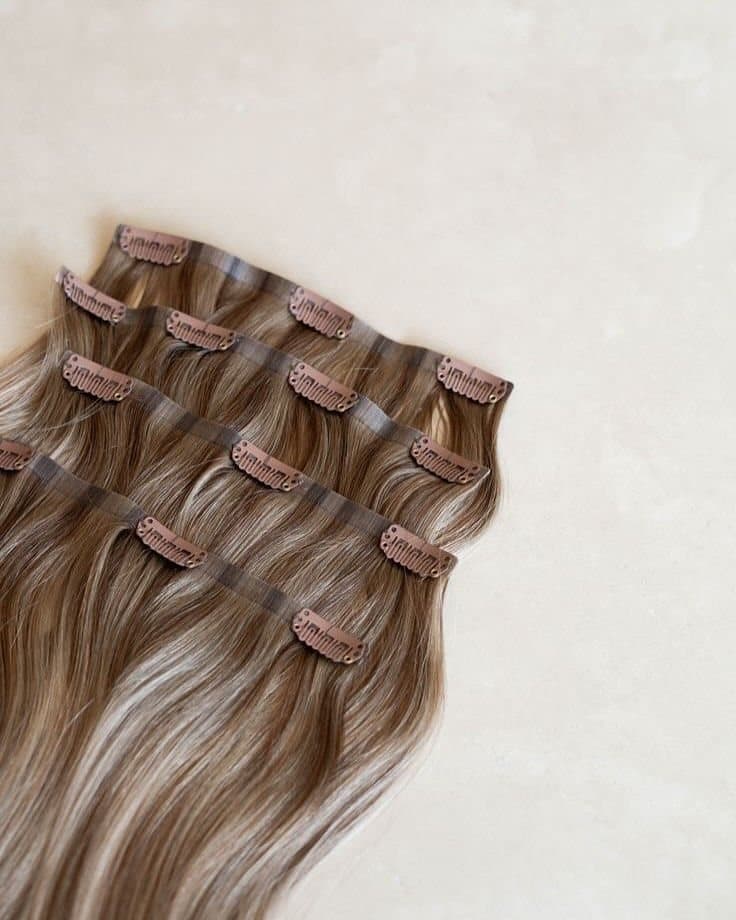
In short: The best clip-in hair extensions are the ones that fit how you live: clip-in is a single 100g piece with no wire that you fit and remove yourself, so it suits occasional wear. If you would rather not touch your extensions for weeks, tape-in, weft or flat-tip are the better fit.
- Clip-in
- one 100g piece, no wire
- Fitted by
- you, at home
- Removed
- every day, by you
- Clip-in (100g)
- from £216 (45 cm) to £282 (60 cm)
Which extension method fits you
Comparing the best clip-in hair extensions with halo, weft, tape-in and flat-tip comes down to one question: how do you want to remove them? Clip-in suits anyone who wants to fit and remove the hair themselves, without booking a stylist appointment. It is a single 100g piece with no wire, built for fast, daily self-removal, which is why it fits occasional wear best.
Any method can strain hair if it pulls on the roots, so fit matters as much as format. At Prominente Haare we sell clip-in, flat tip, halo, weft and tape-in, so this guide covers all five.
Clip-in, flat tip, halo, weft and tape-in side by side
A side-by-side view makes the trade-offs obvious. Use it to narrow down before you read the fit notes below.
| Method | Who installs it | Worn for | Structure | Removed how often |
|---|---|---|---|---|
| Clip-in | You, at home | A day at a time | One 100g piece, no wire | Every day |
| Halo | You, at home | A day at a time | Adjustable wire plus clips | Every day |
| Weft | Stylist, sewn or braided into a foundation | Several weeks | Wefted hair secured to a track | By a stylist |
| Tape-in | Stylist, taped near the root | Several weeks before reapplication | Adhesive tape panels | By a stylist, then re-taped higher |
| Flat tip | Stylist, with a heat tool | Several months | Keratin-bonded strands | By a stylist, with heat or solvent |
Clip-in and halo sit at the low-commitment end of the table. Both are self-fitted and removed daily, which is why they suit anyone unsure about a longer-term method, or anyone who simply prefers control over their own hair every evening.
Where each method fits best
Different methods solve different problems. Matching the method to the actual use case avoids disappointment later.
Clip-in fits best for occasional length and volume: an event, a photoshoot, a night out, or simply days when you want a thicker ponytail. Because the piece has no wire and you take it out yourself, it suits people who do not want to think about their extensions between wears.
Halo fits a similar daily-removal lifestyle but distributes weight differently, since the adjustable wire plus clips sits around the head rather than clipping into sections. If your hair is thin or fine, see our guide to halo extensions for thin hair.
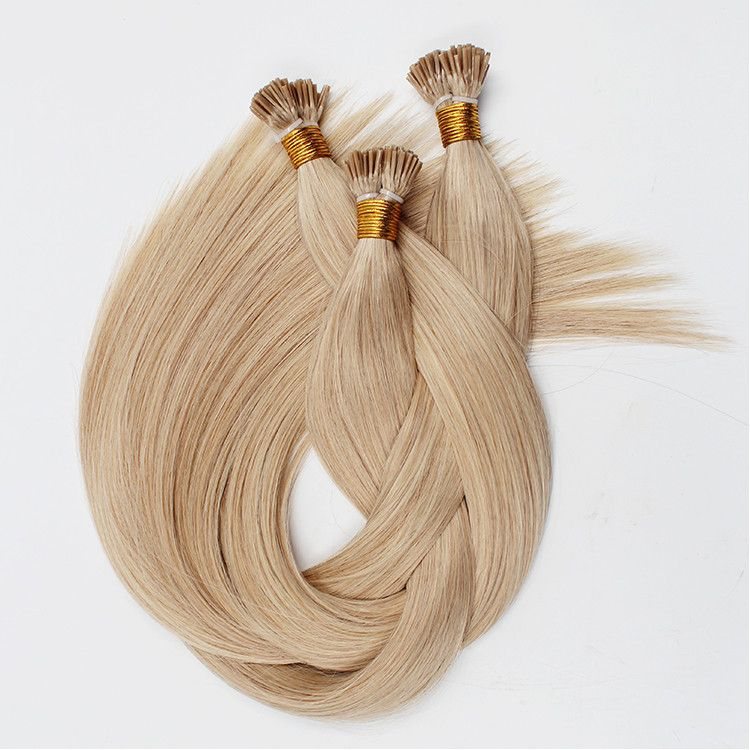
Flat tip
FOR MONTHS, NOT DAYS
Flat tip fits people who want to forget about their hair for months. Keratin-bonded strands are attached with a heat tool and need a stylist, both to fit and to remove.
Tape-in and weft sit in between. Tape-in uses adhesive panels placed near the root and is typically worn for several weeks before the panels need moving up. Weft hair is sewn or braided into a foundation track by a stylist and is also worn for an extended stretch rather than daily.
Hair type sits on a spectrum from fine and straight through to thick and tightly coiled, and care and product choices should follow that type rather than a one-size-fits-all rule (American Academy of Dermatology).
What the five methods cost in pounds
Prices are per 100g and rise with length from 45 cm to 60 cm. They are shown in pounds at the shop's current exchange rate, so they can move slightly.
- Clip-in and halo: £216 to £282
- Weft and flat tip: £187 to £263
- Tape-in: £197 to £272
Choosing between clip-in and the longer-wear methods
Start with one question: do you want to remove the extensions tonight, or not think about them for weeks?
If the answer is "remove tonight", clip-in or halo are the fit. If the answer is "I would rather not touch it for a while", tape-in, weft or flat tip take over, in roughly that order of commitment.
Whichever you choose, tension on the roots is what to watch. The British Association of Dermatologists links hair clips specifically, not just braiding or weaving, to traction alopecia, the hair loss caused by sustained pulling (British Association of Dermatologists). The same source notes it is usually reversible if caught early, with regrowth typically starting around three months after the tension stops (British Association of Dermatologists).
Two more practical checks apply whatever you choose:
- Remove clip-in pieces before washing your natural hair rather than washing with them in, which is the approach dermatologists recommend for clip-in extensions (American Academy of Dermatology).
- Give your natural hair a break between longer-wear styles. Dermatology guidance generally suggests no more than two to three months in any single extension style before switching to one without added hair (American Academy of Dermatology).
Matching the colour before you choose
Colour is worth checking before you buy, whichever method you pick. Our team matches shade manually: you send side-profile photos and team members with 10 to 15 years of experience with hair suggest the closest match.
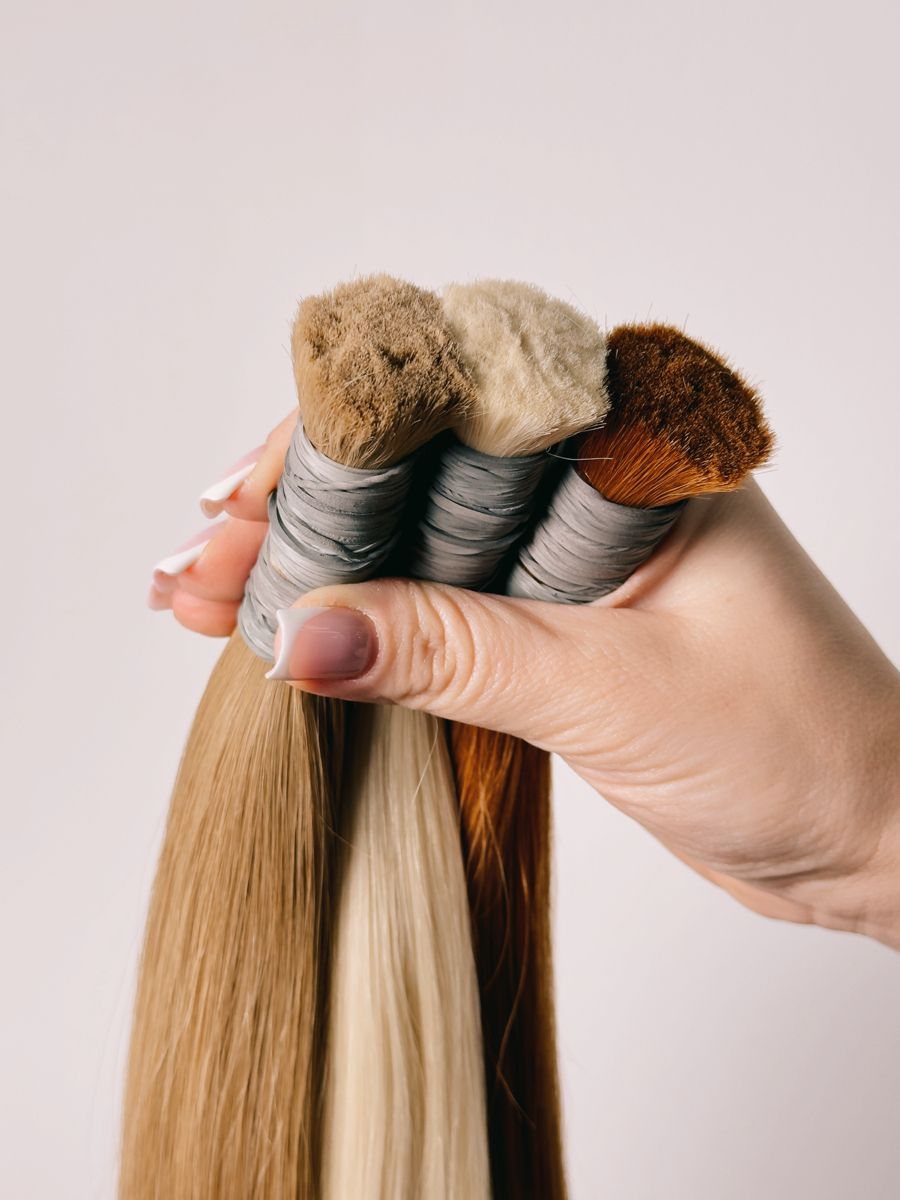
Find your shade
MATCHED BY OUR TEAM
Shade differences are easier to judge side by side, which is why we match by photo. Send side-profile photos of your hair in daylight and we will suggest the closest match.
Next step after comparing methods
If daily control, no professional appointment and a single 100g piece with no wire sound right for you, clip-in is the straightforward starting point.
If you already know you want longer wear, go back to the table above and compare again with your preferred wear time in mind.
Ready to see the range?
Compare clip-in against flat-tip, halo, weft and tape-in before you decide.
Prominente Haare – Hair that lasts longer. The people who suggest shades have 10 to 15 years of experience with hair. About us: our story.
Frequently asked questions
What makes one set of clip-in hair extensions better than another?
Fit. How well the piece's weight, no-wire construction and shade suit your natural hair and routine matters most. Beyond that, the comparison that counts is between methods first (clip-in versus flat-tip, halo, weft or tape-in), because that decides how often you remove the hair at all.
Can clip-in extensions damage my hair?
Clips can, if they sit too tight or too high. The British Association of Dermatologists links hair clips to traction alopecia, hair loss caused by sustained pulling, and says it is usually reversible if caught early.
Should I take clip-in extensions out before washing my hair?
Yes. Remove clip-in pieces before washing your natural hair rather than washing with them in. This is the approach dermatologists recommend for clip-in extensions.
How long can I wear one extension style in a row?
Dermatology guidance generally suggests no more than two to three months in any single extension style before switching to one without added hair.
How much do clip-in hair extensions cost at Prominente Haare?
A 100g clip-in costs £216 at 45 cm, £244 at 50 cm and £282 at 60 cm, shown at the shop's current exchange rate.
Last updated: 1 October 2026