


Weft Hair Extensions Guide: What They Are and How They Work
In short: Weft hair extensions are wide strips of human hair sewn or bonded to your natural hair in horizontal rows, giving fuller coverage than single-strand methods and needing a stylist for both fitting and removal. Everybody sheds roughly 50 to 100 hairs a day, and with a weft in those shed hairs stay trapped in the rows, so removal day can look more dramatic than it is. Weft prices run from €199 to €259 for a 100 g set across 45 cm to 60 cm, shown in AUD at checkout.
- Attachment method
- Sewn or bonded strip
- Fitted/removed by
- Stylist only
- Weft price range
- €199 to €259 (45-60cm)
- Daily shedding
- 50 to 100 hairs/day
What Are Weft Extensions?
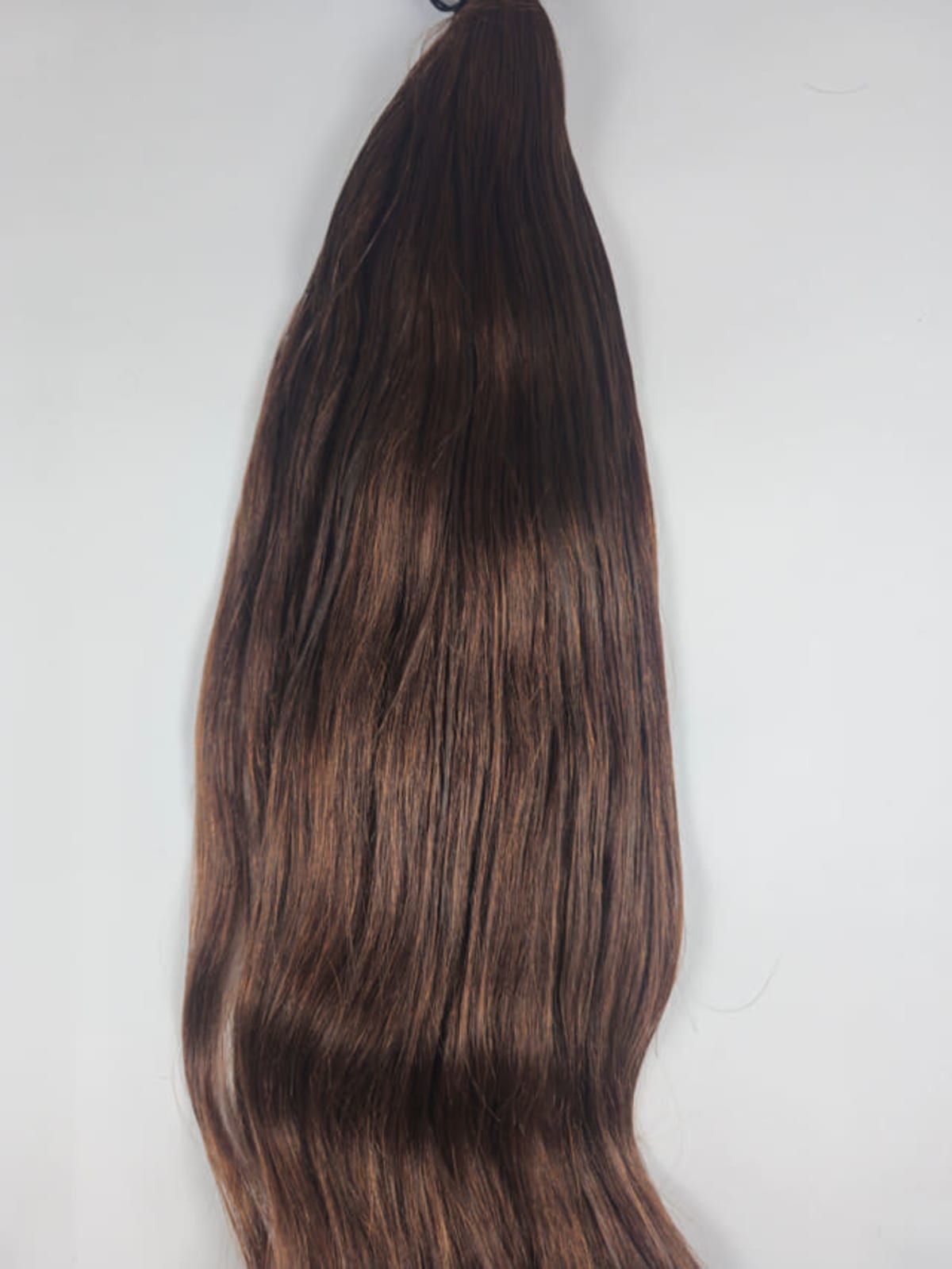
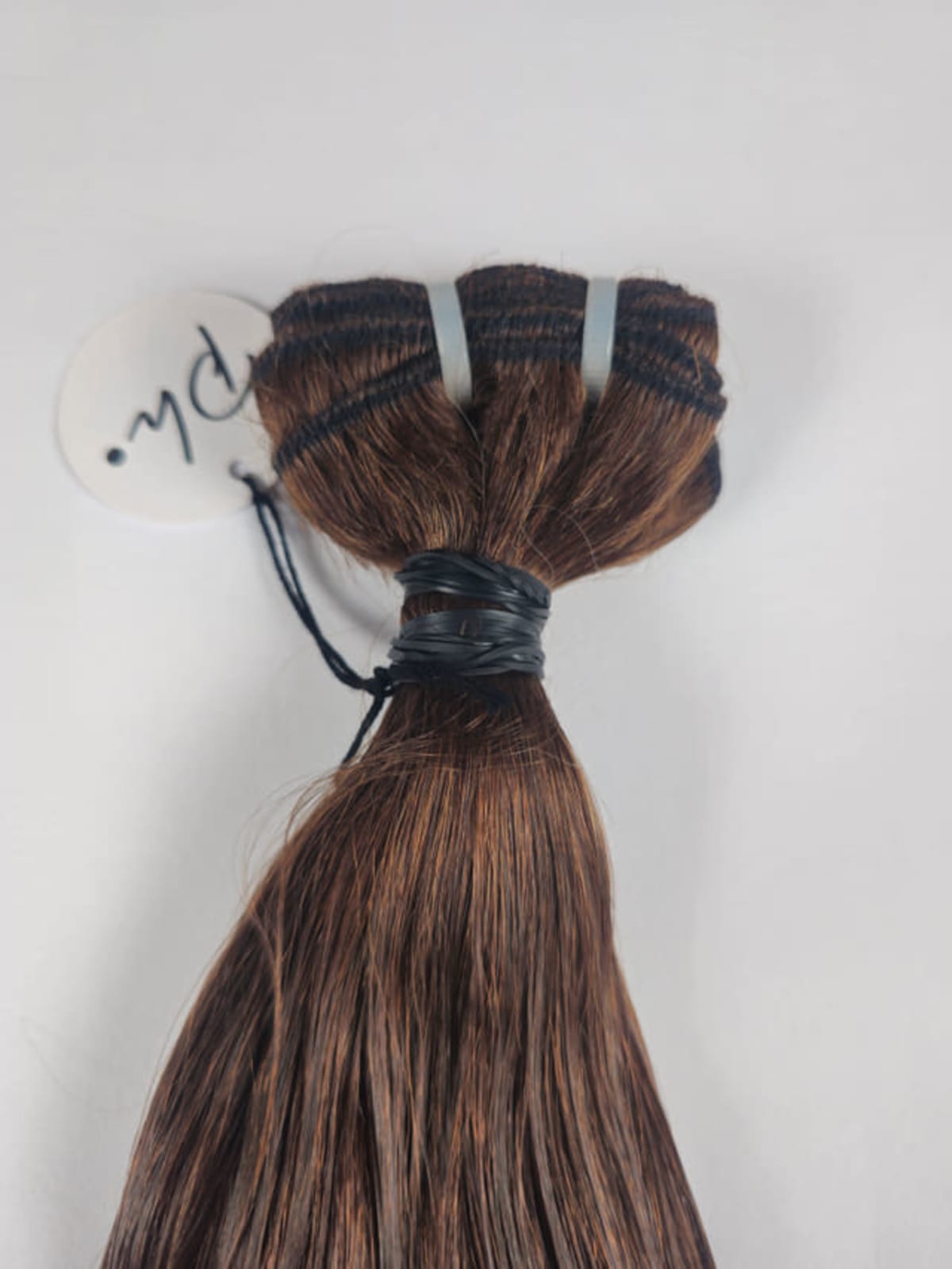
Weft hair extensions are strips of human hair wefted along one edge and attached to your natural hair in horizontal rows, usually by sewing, gluing or clipping the weft to a braid or track. That is the direct answer to what wefts are and how the weft hair extensions method works: a whole row is covered at once, which suits people who want fuller coverage or a full-head length change rather than single strands.
They differ from single-strand methods. Flat tip extensions are keratin-bonded strand by strand. Tape-in extensions use adhesive tape panels instead. Wefts cover a whole row in one piece.
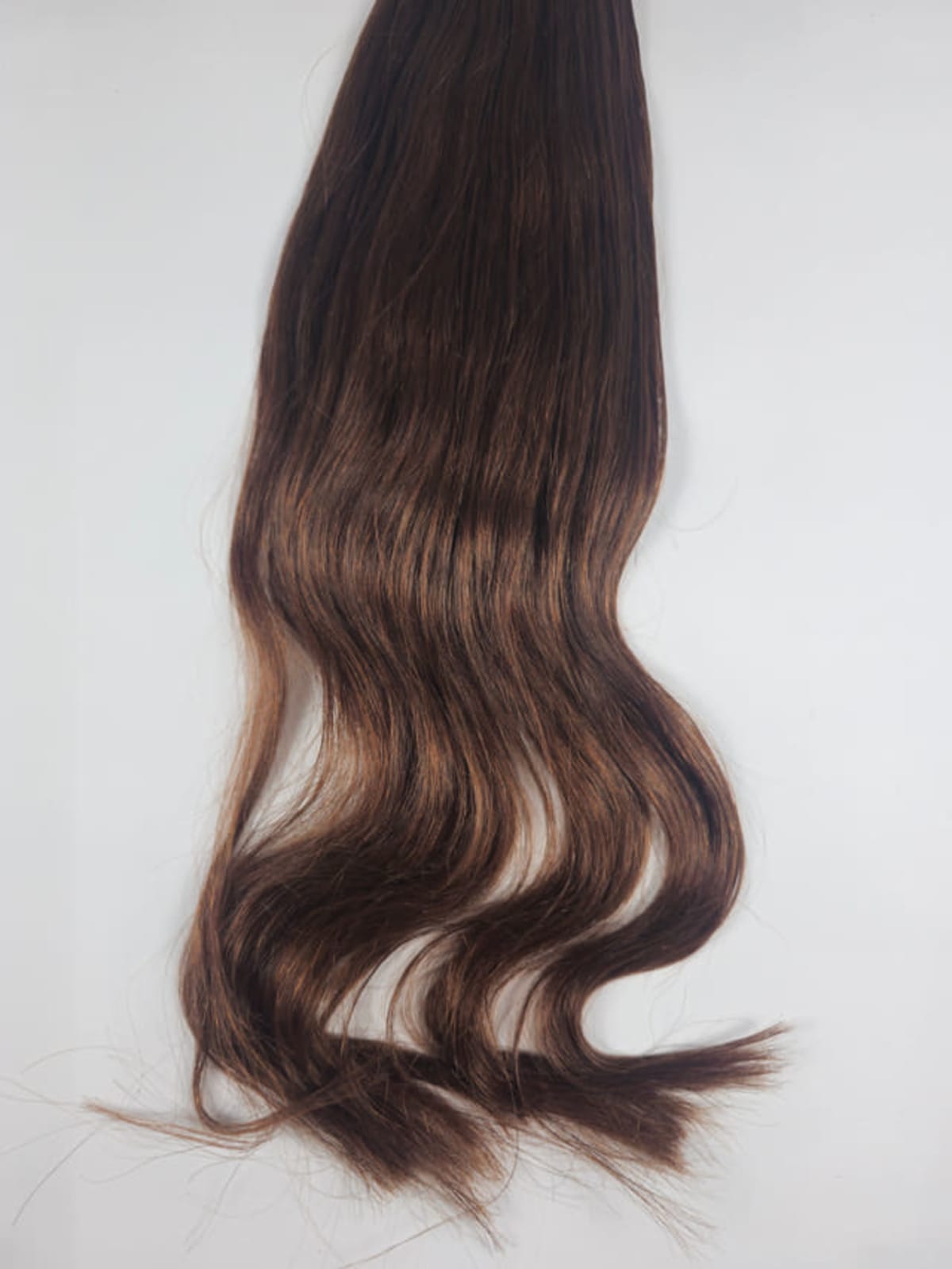
Prominente Haare offers weft extensions as double-drawn, cuticle-aligned human hair, with no short hair, no colour mix and no synthetic hair blended in. You can shop weft extensions directly, and current prices by length are listed in the shop.
How Do Weft Extensions Work?
Weft extensions work by sectioning the natural hair into horizontal rows, building a small foundation such as a braid or thin track along each row, then sewing or bonding the weft strip onto that foundation; removal reverses the process by unpicking stitching or releasing the bond. Both fitting and removal need a trained stylist rather than a DIY step.
Typical fitting steps:
- Hair is sectioned horizontally from nape to crown.
- A foundation row, such as a braid or track, is built along each section.
- The weft strip is sewn or bonded to the foundation.
- Rows are repeated up the head for full coverage.
- The style is blended and cut to match the natural hair.
Who Suits Weft Extensions, and Who Should Think Twice?
Weft extensions suit people who want substantial length or volume added across the whole head. They also suit people happy to visit a stylist for fitting, maintenance and removal.
They suit this group less well: anyone who wants a method they can fit and remove themselves day to day. Clip-ins or halo extensions are built for that instead.
Fine hair can often support thinner weft sections, though a stylist should still confirm density before fitting. Very tight curls or recently permed hair need that same stylist assessment first, since mixed textures affect how well a weft blends and sits.
People wanting daily wear without a semi-permanent install may prefer a method removed nightly. Lightweight, well-matched pieces removed gently each night, with regular scalp breaks, tend to work better for that pattern than an install left in for weeks.
What Are the Limits of Weft Extensions?
Wefts rely on a foundation row, a braid or bond, that holds tension at the root. Fit, weight and timing all affect how that row sits over weeks of wear.
A known issue across semi-permanent extension methods, including sewn-in wefts, is hair loss at removal. Some of this is normal shedding. Everybody sheds roughly 50 to 100 hairs a day, and with extensions in, those shed hairs stay trapped in the rows instead of washing out. Removal day can look more dramatic than it is.
A very large amount of hair loss, such as clumps, visible thinning or bald patches, is not just shedding though. It can point to rows that were too tight, too heavy, left in too long, or placed on hair that was already fine or fragile. Weight loss, hormonal changes, thyroid issues, and iron or protein deficiency have also been raised as possible contributors that can look like extension damage but aren't. Opinion is genuinely split: some stylists say a well-fitted install rarely causes damage. Many people with fine hair say any tension method is one they won't repeat.
After removal, being gentle with styling, considering a trim to even out length, and switching to a non-tension option while hair recovers are frequently suggested steps. If hair loss doesn't slow down, seeing a doctor is worth it, since causes outside extensions are possible.
Colour matching for wefts is done manually. You send side photos and the team suggests a shade, via colour match.
| Method | Attachment | Fitted / removed by |
|---|---|---|
| Weft | Sewn or bonded strip, row by row | Stylist only |
| Flat tip | Keratin bond, strand by strand | Stylist only |
| Tape-in | Adhesive tape panels | Stylist only |
How Do You Book a Weft Fitting?
If you want fuller coverage or added length across the whole head and are comfortable with a professional-installed method, weft extensions are worth discussing with a stylist who can assess your hair's density and texture first.
You can book a weft fitting now, where prices by length are listed as above. For day-to-day care once fitted, see the hair care guide.
Continue your reading
For the next steps in choosing and using extensions, read:
How to Install Hair Extensions: Apply and Remove Them Step by Step · Hair Extensions Price: What Really Decides the Cost
See it in the shop.
Prominente Haare – Hair that lasts longer.
Frequently asked questions
What are weft hair extensions?
Weft hair extensions are strips of human hair wefted along one edge and attached to your natural hair in rows, giving fuller coverage than single-strand methods.
How do weft hair extensions work?
A stylist sections your natural hair into rows, builds a foundation such as a braid or thin track, then sews or bonds the weft strip to that foundation. Removal involves unpicking the stitching or releasing the bond.
Who do weft extensions suit?
People who want fuller coverage or added length across the whole head and who are comfortable visiting a stylist for fitting, maintenance and removal. Those who want to fit and remove extensions themselves day to day may prefer clip-ins or halo extensions instead.
Is hair loss normal after wearing wefts?
Some shedding is normal, since everybody sheds roughly 50 to 100 hairs a day and those hairs stay trapped in the rows while a weft is worn, so removal day can look more dramatic than it is. Clumps, visible thinning or bald patches are not just shedding and are worth discussing with a professional.
How are weft extensions colour matched?
Colour matching for wefts is done manually, you send side photos and the team suggests a shade.
Last updated: 6 November 2026