

Halo Extensions for Thin Hair: Which Option Fits, and Who Should Be Careful

In short: If your hair is fine or thin but not actively shedding, the lowest-tension starting points are a halo (one wefted piece held by an adjustable wire plus clips across the crown) or a clip-in set (a single 100 g piece with no wire, worn only when you want it). Flat tip, tape-in, and weft methods bond or sew closer to the scalp and need extra care. If you already see a widening part, shedding, or a tender scalp, see a dermatologist before adding any extension.
- Halo attachment
- Adjustable wire plus clips spreads weight across the crown instead of clamping near the root
- Clip-in attachment
- Single 100 g piece with no wire, the lowest-tension, occasional option
- Warning sign
- Pain or a headache while wearing an attachment means too much tension
- Color match service
- Manual, photo-based shade suggestion from the Prominente Haare team, not automated
Are Halo Extensions Good for Thin Hair?
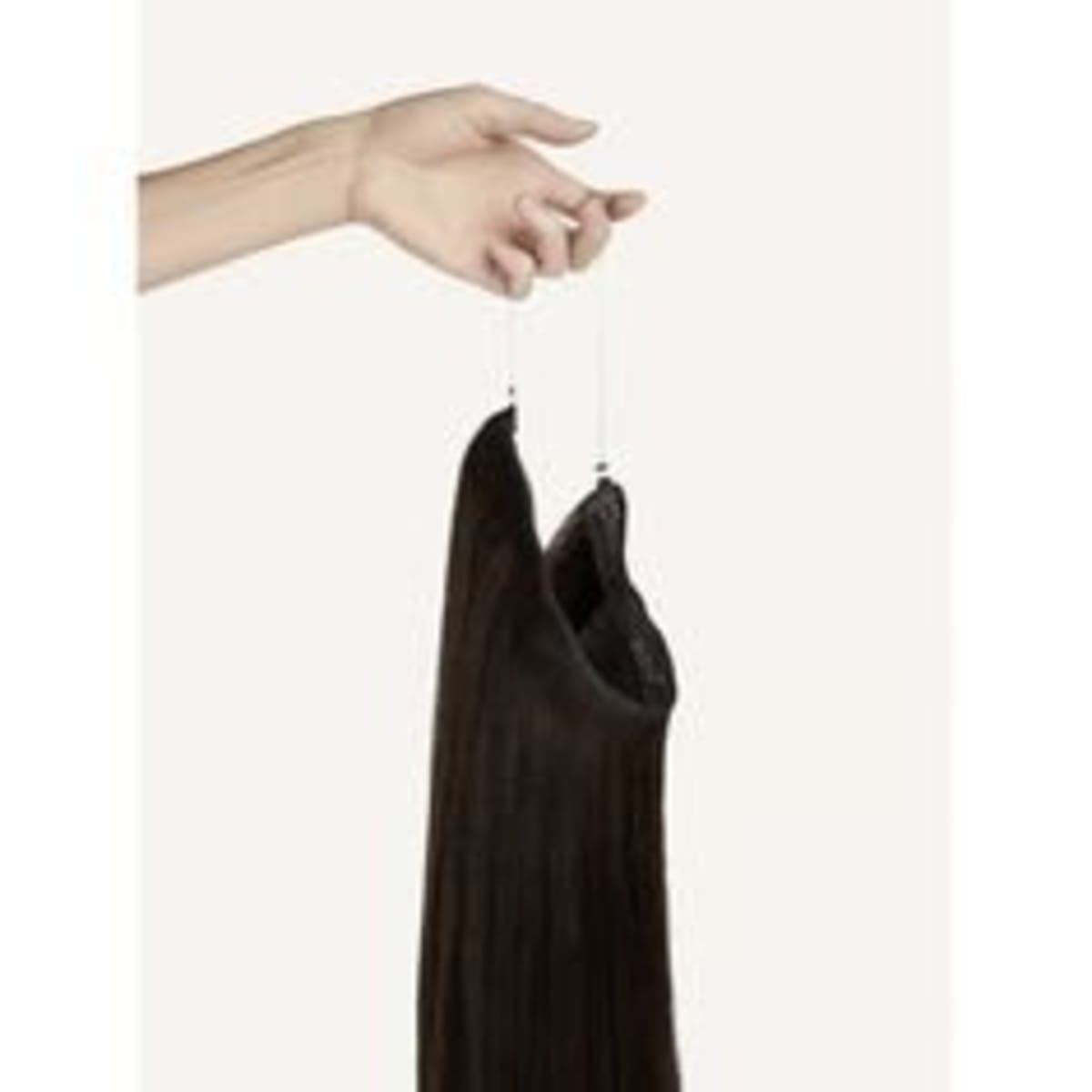
A halo extension is a single wefted piece of hair. It sits across the crown, held by an adjustable wire plus clips. Halo extensions work best for fine or thin hair that is not actively thinning. Be cautious if you already notice shedding, a widening part, or a tender scalp.
The wire spreads tension over a wide area. It does not clamp small sections near the root. That makes it a gentler attachment choice for many people with fine hair. The halo uses a wire plus clips; it is not wireless.
Hair extensions and weaves are a recognized cause of traction alopecia, a pulling-related form of hair loss. Dermatologists list them among higher-risk hairstyles for this reason. according to the American Academy of Dermatology
For the lowest tension, compare a clip-in set. It is a single 100 g piece with no wire, so it clips in temporarily instead of staying attached all day. For longer wear, you can see the halo extension's wire-and-clip construction; current prices are listed in the shop.
What Matters Most When Your Hair Is Fine or Thin?
Three things matter most: how a method spreads weight, how much tension sits at the hairline, and how much hair you add at once.
Tight hairstyles are the most common cause of traction alopecia, though hair weight can also play a part. This matters more than the extension category itself. according to the British Association of Dermatologists
Traction alopecia starts out reversible, but it can become permanent if the tension continues. according to a clinical overview
If you want a shade suggestion before deciding, our team offers a manual color match step. More on how that works below.
Which Extension Methods Fit Thin Hair, and Which Need Extra Care?
Each method suits thin hair differently, based on how it attaches.
| Method | How it attaches | Fit for fine/thin hair |
|---|---|---|
| Halo | Adjustable wire plus clips across the crown | Good starting point; weight spreads across the head |
| Clip-in | Clips onto a single 100 g piece, no wire | Lowest commitment; easiest to remove daily |
| Flat tip | Keratin bonded at the root | Needs extra care; bonds sit closer to the root |
| Tape-in | Adhesive wefts applied in sections | Needs extra care; re-application adds handling over time |
| Weft | Sewn or braided into a track | Needs extra care; relies on a fixed base at the scalp |
Heavier hair can also add to the pulling that causes traction alopecia. Choosing a lighter set is worth considering alongside the method itself. according to the British Association of Dermatologists
Flat tip, tape-in, and weft sets bond or sew closer to the scalp. They need extra care for fine or thin hair.

How Does the Prominente Haare Team Help You Choose?
Prominente Haare's team supports your shade decision with a manual process.
How color match works:
- You send side photos of your current hair.
- The team reviews them and suggests a shade to try.
A person reviews every submission. There is no automated matching.
If you already see hairline recession or scalp tenderness, see a dermatologist first. Delaying care raises the risk that hair loss becomes permanent. according to the American Academy of Dermatology
What's the Next Step?
If your hair is fine or thin, start with the lowest-tension option you're comfortable with. Compare the halo's wire-and-clip design against a clip-in set.
Both skip the bonded or sewn-in attachments that need the most care.
Ready to choose a shade first? Send side photos through color match before you decide. You can browse current styles and prices anytime in the shop.
See it in the shop.
Prominente Haare – Hair that lasts longer.
Frequently asked questions
Are halo extensions good for thin hair?
They can be a good starting point for fine or thin hair that is not actively thinning, because the wire plus clips spread weight across the crown instead of clamping small sections near the root. Be cautious if you already notice shedding, a widening part, or a tender scalp.
What is the lowest-tension hair extension option?
A clip-in set is the lowest-commitment option. It is a single 100 g piece with no wire, so it clips in temporarily instead of staying attached all day.
What warning sign means an extension is too tight?
Pain or a headache while wearing an attachment means too much tension, according to AAD dermatologist guidance.
Which extension methods need extra care for thin hair?
Flat tip, tape-in, and weft methods bond or sew closer to the scalp and need extra care for fine or thin hair.
How does the Prominente Haare color match service work?
You send side photos of your current hair, and a person on the team reviews them and suggests a shade to try. There is no automated matching.
Last updated: October 11, 2026